EC50, LC50 and LD50 in Toxicology: Understanding Toxicity, Lethal Dose and Dose–Response Analysis
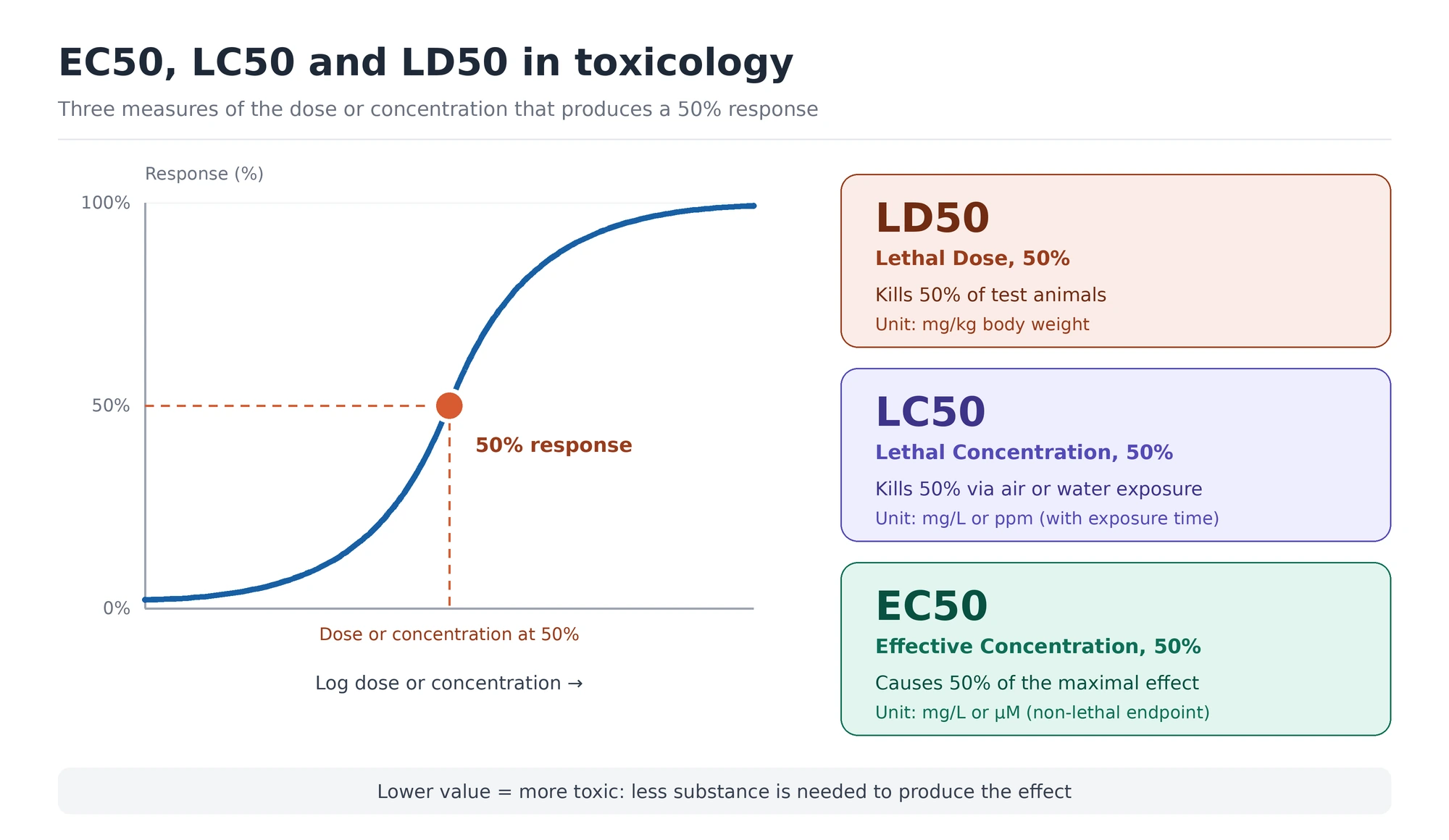
Ever wondered how chemicals, drugs and other substances affect living organisms is a fundamental part of toxicology. Whether evaluating a pharmaceutical compound, assessing the safety of a chemical, or studying environmental pollutants, researchers need reliable ways to measure the relationship between exposure and biological response.
Three important toxicological parameters used in dose–response analysis are EC50 (Effective Concentration 50), LC50 (Lethal Concentration 50) and LD50 (Lethal Dose 50).
Although these terms are closely related, each represents a different biological endpoint. EC50 measures a defined biological effect, whereas LC50 and LD50 are specifically associated with mortality.
These parameters help toxicologists understand the relative toxicity of substances, compare experimental findings, identify concentration-dependent effects and support chemical safety assessments.
In this article, we explore the LD 50 meaning, the lethal dose 50 definition, LD50 examples, and the important differences between LC50 and LD50, including how these endpoints are interpreted in toxicological research.
LD50 stands for Lethal Dose 50, also known as the median lethal dose. It is a toxicological measurement that represents the statistically estimated amount of a substance expected to cause death in 50% of a defined experimental population under specified conditions.
In simple terms, the LD50 indicates how much of a particular substance is required to cause mortality in half of the test animals exposed to it.
The lethal dose 50 definition refers to the median dose of a chemical or substance that is expected to cause death in 50% of a specified test population following a defined exposure route and observation period.
LD50 is generally expressed in:
For example, Let's take a toxicology experiment in which an experimental LD50 value of 200 mg/kg indicates that the statistically estimated dose associated with 50% mortality in the specified test population is 200 milligrams per kilogram of body weight.
This does not mean that every animal receiving this dose will die. Rather, it represents a population-level estimate derived from experimental observations and statistical analysis.
LD50 is commonly used to compare the acute toxicity of substances under comparable experimental conditions.
An important principle in toxicity LD50 interpretation is that a lower LD50 generally indicates greater acute toxicity, while a higher LD50 generally indicates lower acute toxicity.
However, LD50 values should not be interpreted in isolation. The exposure route, species, formulation, exposure duration and experimental conditions can substantially influence the results.
LC50 stands for Lethal Concentration 50. It represents the concentration of a substance in a particular exposure medium that is statistically estimated to cause death in 50% of a defined experimental population over a specified exposure period.
Unlike LD50, which measures the amount of a substance administered to an organism, LC50 measures the concentration to which organisms are exposed.
LC50 is particularly important in inhalation toxicology and environmental toxicology, including studies involving aquatic organisms exposed to contaminated water.
LC50 is commonly expressed using units such as:
For example, a 96-hour LC50 study in fish may report the concentration of a chemical in water associated with 50% mortality over 96 hours.
The exposure duration is essential when interpreting an LC50 result. A 24-hour LC50 and a 96-hour LC50 are not directly interchangeable.
LC50 helps researchers evaluate the acute toxicity of substances present in air, water or other exposure media. It is widely used in:
EC50 stands for Effective Concentration 50. It is a measure used to determine the concentration of a substance that produces a defined biological effect at the 50% response level.
The exact interpretation of EC50 depends on the experimental model and the endpoint being measured.
In pharmacology and concentration–response studies, EC50 generally refers to the concentration that produces 50% of the maximum achievable response of a particular biological system.
In environmental toxicology, EC50 may represent the concentration that produces a specified effect in 50% of the exposed test organisms, such as immobilisation, reduced growth or another defined response.
EC50 is useful for evaluating the biological activity and concentration-dependent effects of substances without necessarily measuring mortality.
For example, researchers may use EC50 to investigate:
A lower EC50 generally indicates that a lower concentration is required to produce the specified response. However, EC50 alone does not establish whether a substance is more toxic overall because the magnitude and nature of the measured effect also matter.
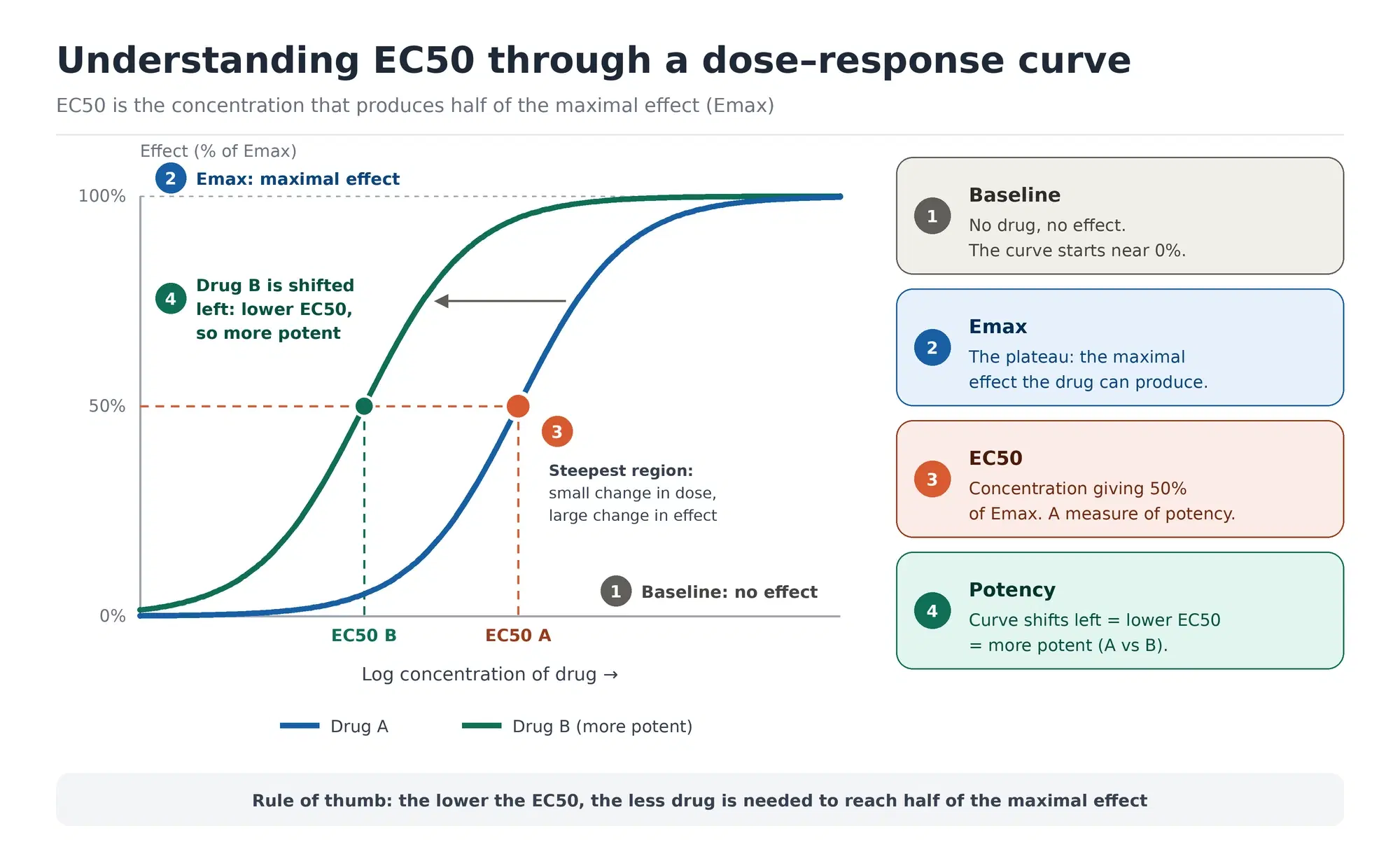
In toxicology a concentration–response curve helps researchers understand how biological responses change as the concentration of a substance increases.
The EC50 is identified at the concentration corresponding to half of the maximum response in a typical graded concentration–response experiment. Comparing EC50 values can help researchers evaluate the relative potency of different compounds when the experimental conditions and endpoints are comparable.
Important distinction: EC50 is not necessarily a measure of mortality. If the measured endpoint is cell viability, enzyme activity or another biological response, the interpretation must reflect that specific endpoint.
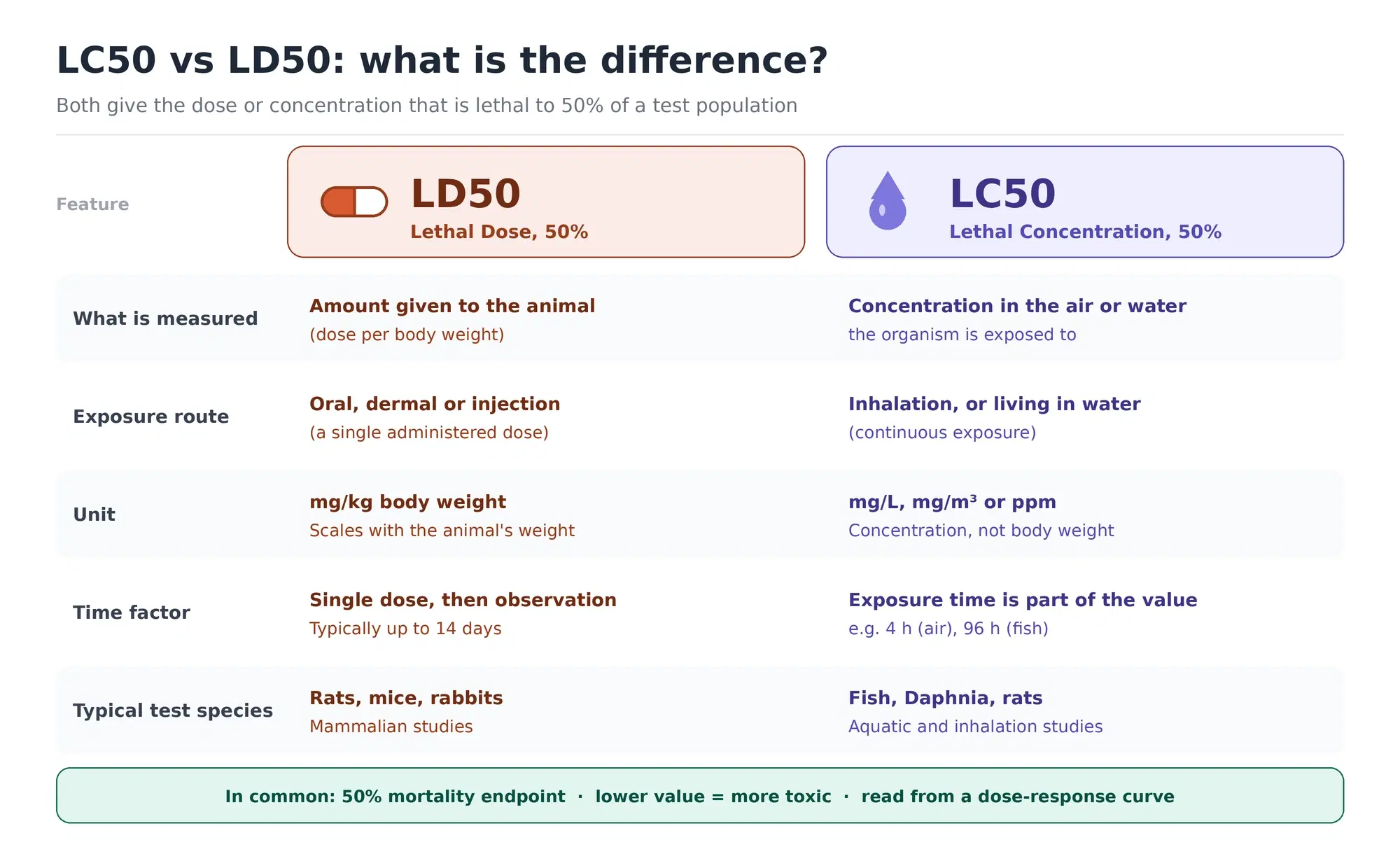
One of the most common questions in toxicological research is the difference between LC50 and LD50.
Both parameters are used to evaluate acute toxicity and estimate the exposure level associated with 50% mortality. However, they differ in how the exposure is quantified.
The primary distinction is that LD50 measures the administered dose, whereas LC50 measures the concentration in the exposure medium.
Now let's talk about the key differences
1. Measurement approach
LD50 evaluates the quantity of a substance administered to an organism, often through oral, dermal or other specified exposure routes.
LC50 evaluates the concentration of a substance in the surrounding medium, such as air or water.
2. Exposure conditions
LD50 studies generally involve a defined administered dose, whereas LC50 studies involve exposure to a defined concentration over a specified period.
3. Application in toxicology
LD50 is commonly associated with acute toxicity assessment of chemicals and pharmaceutical substances. LC50 is particularly relevant to environmental toxicology and inhalation studies.
4. Interpretation of results
Both endpoints help researchers compare acute toxicity, but their numerical values cannot be directly compared because they measure different exposure parameters.
LD50 examples are useful for understanding how toxicologists interpret the acute toxicity of different substances.
Consider a hypothetical laboratory study involving two chemical compounds:
Under comparable experimental conditions, Compound A has a lower LD50 than Compound B. This indicates that a smaller administered dose of Compound A is associated with 50% mortality in the defined test population.
However, this comparison is meaningful only when the studies use comparable species, exposure routes, observation periods and experimental methods.
Here are some examples of LD50 applications in toxicology
| Substance or category | Toxicological application |
|---|---|
| Pharmaceutical compounds | Evaluating acute toxicity during preclinical safety assessment |
| Pesticides | Assessing acute toxicity and supporting hazard classification |
| Industrial chemicals | Evaluating potential hazards associated with accidental exposure |
| Solvents | Studying acute toxicity through relevant exposure routes |
| Natural toxins | Characterising toxicological effects under controlled research conditions |
These are examples of applications, not a numerical ranking of the substances. Actual LD50 values must be obtained from validated experimental studies and interpreted alongside their species, route and study conditions.
If we talk about the search term LD50 list for humans, it is often used when looking for information about the lethal dose of different chemicals in people.
However, there is an important scientific limitation: there is no comprehensive, experimentally validated human LD50 list for chemicals.
Unlike laboratory animal studies, researchers cannot ethically conduct controlled experiments to determine the dose that would kill 50% of a human population.
Consequently, human toxicity assessments rely on other sources of evidence, including:
Toxicity can vary considerably between species because of differences in metabolism, absorption, distribution, elimination and biological sensitivity.
Other factors also influence the toxicological response, including:
For these reasons, an LD50 value obtained from an animal experiment should not be interpreted as a confirmed lethal dose for humans.
Human health risk assessments require a broader evaluation of available evidence rather than relying on a single LD50 measurement.
Toxicological endpoints are generally estimated using dose–response or concentration–response experiments.
In a typical experimental study, researchers evaluate the effects of different exposure levels and record the corresponding biological responses.
Depending on the study objective, these responses may include:
The collected data are analysed using appropriate statistical methods to estimate the concentration or dose associated with the specified response.
EC50, LC50 and LD50 are important parameters in toxicology, providing different perspectives on how substances affect biological systems.
While EC50 helps researchers evaluate concentration-dependent biological effects, LC50 and LD50 are primarily used to assess acute lethality through concentration-based and dose-based exposure measurements, respectively.
Understanding the differences between these endpoints, selecting appropriate statistical models and interpreting experimental findings within their study context are essential for reliable toxicological research.
With the growing complexity of toxicological datasets, specialised statistical software like ToxCore can help researchers perform dose–response analysis, estimate toxicity endpoints and generate meaningful interpretations from experimental data.
Frequently Asked Questions (FAQs)
LD50 stands for Lethal Dose 50. It is the statistically estimated dose of a substance expected to cause death in 50% of a defined experimental population under specified conditions.
The lethal dose 50 definition describes the median dose of a substance associated with 50% mortality in a specified test population. It is generally expressed in mg/kg of body weight.
LD50 measures the administered dose associated with 50% mortality, whereas LC50 measures the concentration in an exposure medium associated with 50% mortality. LD50 is commonly expressed in mg/kg, while LC50 is expressed in units such as mg/L or mg/m³.
EC50 is the concentration associated with a defined 50% biological response. Depending on the experimental model, it may represent half of the maximum response or an effect observed in 50% of the test organisms.
Yes. Generally, a lower LD50 indicates greater acute toxicity because a smaller dose is associated with 50% mortality under comparable experimental conditions.
Animal-derived LD50 values cannot be directly translated into human lethal doses. Human toxicity assessments require additional evidence, including clinical observations, exposure data, toxicokinetic information and other relevant studies.
Probit analysis and logistic regression are commonly used to estimate LD50 and LC50 from mortality data. The selection of the statistical model depends on the experimental design and characteristics of the dataset.
Both are dose–response or concentration–response endpoints. However, EC50 measures a specified biological effect, whereas LD50 specifically measures the dose associated with 50% mortality. They therefore represent different toxicological outcomes.